

Insight and direction
Research & Strategy
Market, customer and competitor intelligence that helps leaders make clearer brand, product, technology and growth decisions.
Market and competitor intelligenceCustomer and stakeholder researchActionable business direction
Before choosing a provider
Reduce assumption by connecting business decisions to structured evidence, market context and practical strategic priorities.
Research should reduce uncertainty before a business invests in branding, technology, marketing or market entry. The output must translate evidence into decisions: which audience to prioritize, what offer to present, how to differentiate and what should be tested next.
UAE market context
Market-entry and growth decisions in the UAE need evidence, context and a clear line to action.
Dalmut combines desk research, competitor review, customer input and digital evidence to reduce assumption. The output is structured for decisions about positioning, offer, market, product, content or campaign direction.
Problems this service should solve
When major decisions rely on assumptions, internal opinions or outdated evidence.
Unclear market size, customer priorities, competitor positioning and proposition fit can make branding, product, technology and marketing investments difficult to defend.
Decisions depend on internal assumptions
Teams debate audiences, pricing, positioning and channels without structured external evidence.
Competitor analysis is superficial
Research lists websites and social accounts but does not compare offers, proof, customer journeys or market gaps.
Customer feedback is anecdotal
A small number of sales conversations are treated as representative of the entire market.
Reports do not lead to action
Findings are presented without priorities, ownership, implications or a practical next phase.
Subservices and deliverables
Turn market, customer and competitor evidence into an actionable direction.
Market research, consumer research, public opinion, competitor analysis, business intelligence and digital strategy should answer a defined management decision.
Market and industry research
Assess category structure, demand signals, regulations, trends and commercial context.
Competitor analysis
Compare offers, positioning, visibility, customer experience, proof and channel activity.
Customer and consumer research
Explore needs, language, objections, behavior and decision factors through suitable methods.
Brand research
Evaluate awareness, perception, differentiation, message and identity performance.
Public opinion and survey design
Structure questions, samples, data collection and reporting around a defined purpose.
Digital research and search demand
Use search, content, website and campaign evidence to identify intent and gaps.
Business intelligence and synthesis
Combine sources into useful patterns, scenarios, risks and opportunities.
Strategy and implementation roadmap
Translate evidence into positioning, product, channel, content and measurement priorities.
Scope architecture
What must be clear before research questions or methods are approved.
The final statement of work confirms deliverables, dependencies, owners, approval points and what remains outside the current phase.
Decision framing
Business question, hypotheses, stakeholders, required confidence, available evidence and intended use.
Research design
Desk research, market sizing approach, competitor framework, interviews, surveys, sampling and data handling.
Analysis and synthesis
Patterns, segments, opportunities, risks, positioning, scenarios and commercial implications.
Strategy and activation
Priority choices, roadmap, measurement, briefs for brand, product, platform, campaign or operations.
Ways to engage
Select the evidence depth that matches the value and risk of the decision.
A focused first phase can be commercially responsible when the next release, ownership and success criteria are clear.
A focused study for one market, offer, audience or launch decision.
Request this scopeResearch, positioning and phased go-to-market direction.
Request this scopeRegular competitor, customer, search and campaign insight for management decisions.
Request this scopeReal operating scenario
A company evaluating UAE market entry or service expansion
Dalmut clarifies the decision the research must support, reviews the category and competitors, identifies relevant customer or stakeholder groups, gathers approved primary and secondary evidence, and organizes findings into opportunity, risk and action. The final strategy connects market insight to positioning, service design, website content, go-to-market activity and measurement.
- 01Decision and research questions
- 02Secondary and competitor research
- 03Primary research where approved
- 04Analysis and strategic implications
- 05Prioritized action roadmap
Budget and timeline drivers
What changes the commercial scope.
Dalmut prices against evidence, complexity and responsibility. A credible estimate is produced after the factors below are understood.
Primary interviews, surveys and fieldwork require more coordination than desk research.
Specialist, executive or multilingual respondents affect recruitment and timing.
UAE emirates, GCC markets and worldwide comparisons require different sources and interpretation.
Market entry, public opinion and major investment decisions need stronger validation and governance.
Business impact and measurement
Measure decision confidence, priority clarity and actionability.
A strong outcome is not a long report. It is a defensible decision, a clear set of priorities and evidence that teams can apply.
AreaCommon starting pointTarget operating state
Broad assumptions
Prioritized decision-maker and need
Competitor imitation
Evidence-led differentiation
Large untested commitment
Phased priorities and testable hypotheses
Department opinions
Shared evidence and documented decisions
Whether leadership can choose and explain a direction.
Quality and relevance of sources behind the recommendation.
Critical beliefs tested before investment.
How directly findings translate into approved actions.
Why Dalmut for this work
Research is connected directly to brand, product, technology and growth execution.
Dalmut translates findings into practical choices, message hierarchy, experience requirements and an implementation roadmap.
Research starts with a decision
Every method is connected to the business question the team must answer.
Commercial and digital evidence combined
Market context, search behavior, competitor communication and customer journeys are considered together.
Clear limitations
Sample, source, date and confidence limitations are documented rather than hidden.
Strategy leads into delivery
Findings can be translated into brand, product, website, campaign and operational requirements.
Stronger decisions with less assumption and clearer priorities.
- Clearer market opportunities
- Better audience understanding
- Evidence-led positioning
- Prioritized service and product decisions
- Reduced strategic risk
- Actionable growth roadmap
Where structured research creates immediate strategic value.
Market-entry planningNew business and service launchesBrand repositioningDigital transformationCompetitive marketsInstitutional and public-interest projects
Delivery strategy
Frame, design, collect, analyze, decide and activate.
The method, sample, sources and limitations are documented so findings can be interpreted responsibly and converted into action.
Clarify the decision, question and evidence required.
Design the research method and source framework.
Collect, validate and analyze relevant information.
Translate findings into implications and strategic options.
Prioritize actions, owners and measurable next steps.
Related client work
View all projects See the capability in three genuine operating contexts.

Strivano
A corporate website connecting fractional CFO, startup finance, outsourcing, transaction advisory, technology enablement and practical AI automation.

PVS Nest
A premium property discovery and investment website connecting listings, projects, developers, locations and direct consultant enquiries.
Rizing Nation
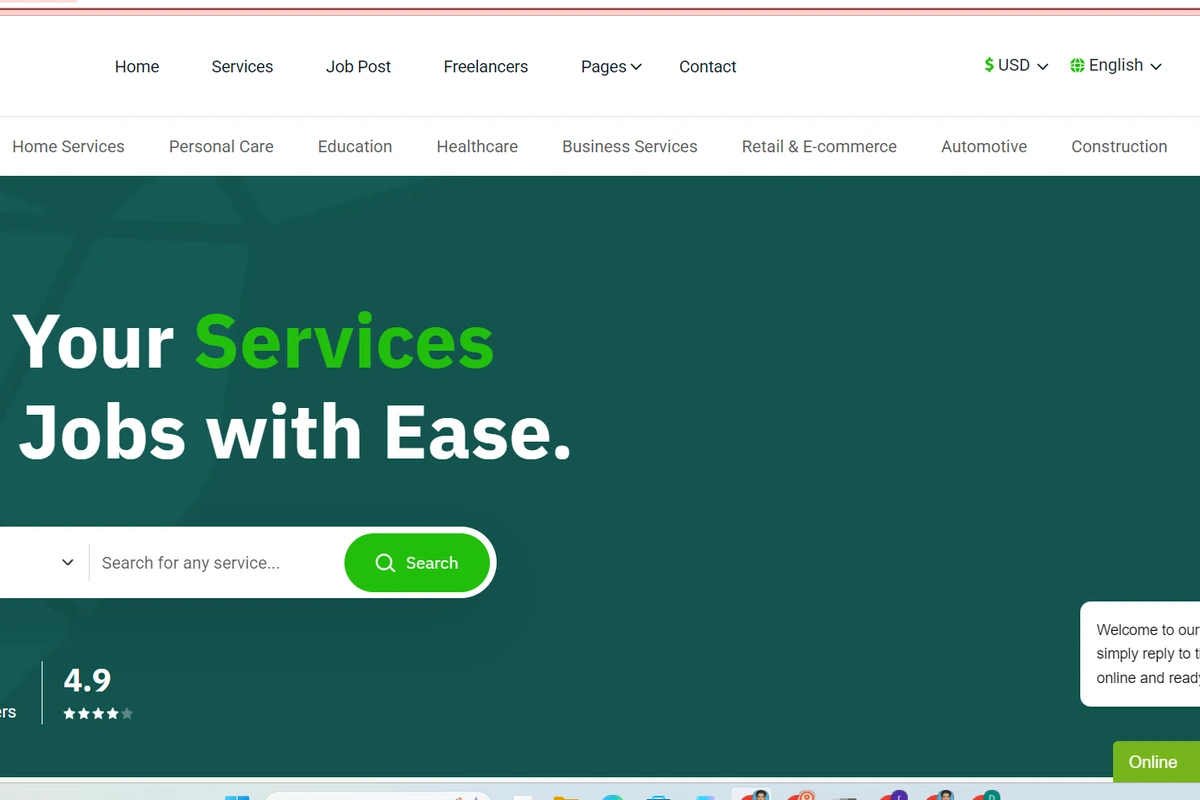
A multi-country marketplace enabling businesses, freelancers and agencies to publish services, post jobs and connect through structured discovery.
Useful planning guidance
All insights Prepare the business decision before requesting scope.

UAE Market Entry Branding
A practical balance between local credibility, international clarity and scalable brand architecture.
Read the complete guide
Brand System Before Website
How positioning, identity, messaging and visual rules reduce rework and improve the final digital experience.
Read the complete guide
AI Automation Readiness
A practical readiness framework covering workflows, data, integrations, governance and measurable business value.
Read the complete guideFrequently asked questions
What UAE leaders ask before commissioning market or customer research.
Include technical, commercial, ownership or implementation questions in your proposal request so the answer can be grounded in your actual situation.
What types of market research do you provide?+
Scope can include desk research, competitor analysis, customer interviews, surveys, stakeholder research, digital demand analysis and business intelligence.
Can you conduct public opinion surveys?+
Survey scope depends on sample requirements, methodology, language, data protection and any applicable approvals. These requirements are defined before collection begins.
How do you ensure research quality?+
We document the research question, source, method, sample, date, limitations and interpretation. Important decisions should not rely on one weak source.
Can research support a branding or website project?+
Yes. Research can clarify audience, positioning, content priorities, competitor gaps, conversion questions and market language before creative or development begins.
Do you guarantee the market opportunity?+
No research can remove all uncertainty. The purpose is to improve the quality of decisions and identify risks, evidence gaps and testable opportunities.
Will we receive a presentation or written report?+
Outputs can include an executive presentation, detailed report, competitor matrix, customer insights, opportunity map and implementation roadmap.
Make the next decision with clarity
Define the management decision before choosing the research method.
Share the decision, market, available evidence, stakeholders and timing. Dalmut will recommend the right research and strategy scope.